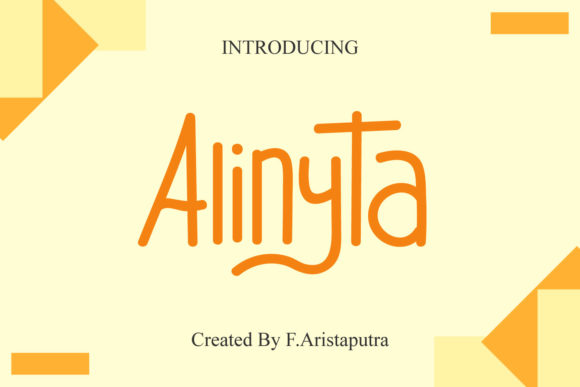
Alinyta: Evaluating a Dual-Character Handwritten Font for Your Design Projects
Selecting a typeface is rarely a simple aesthetic choice. It carries functional weight, shaping how a brand communicates and how an audience receives information. Alinyta enters the conversation as a handwritten font that combines both sans serif and serif characters within a single, cohesive design. Its minimal structure and eye-catching personality make it a candidate for projects ranging from product packaging to social media graphics. But like any design asset, its value depends entirely on context, application, and the specific goals you bring to a project.
This evaluation explores Alinyta's characteristics, practical strengths, and the situations where it aligns well with creative needs — as well as where alternatives might serve you better.
What Alinyta Brings to the Table
At its core, Alinyta is a handwritten font designed to feel approachable and human. The combination of sans serif and serif letterforms within one typeface is not something every designer encounters daily. This dual-character approach introduces visual variety without requiring you to switch between multiple fonts. The serif characters lend a touch of refinement and tradition, while the sans serif letters keep the overall impression light and contemporary.
Alinyta is also PUA encoded, which stands for Private Use Area encoding. In practical terms, this means you can access its full set of glyphs, alternates, and decorative swashes without needing advanced design software or specialist plugins. For many designers, this removes a significant barrier to customising typography and experimenting with letterform variations.
Why Designers Consider Alinyta for Branding and Packaging
Handwritten fonts occupy a specific niche in visual identity work. They suggest authenticity, imperfection, and personal touch — qualities that many brands want to associate with their products. Alinyta fits this space well, but it distinguishes itself through restraint. Unlike heavily embellished script fonts that can overwhelm a layout, Alinyta's minimal approach keeps the design legible even at smaller sizes.
Branding projects that benefit from a human, handcrafted feel often find Alinyta worth evaluating. This includes artisanal food labels, boutique fashion tags, beauty product packaging, and café signage. The font's clean structure supports readability, which is essential when customers need to quickly parse product names, ingredients, or promotional messages.
Invitation designers and stationery creators also find value in Alinyta's balanced personality. Wedding suites, greeting cards, and event posters frequently call for typography that feels personal without sacrificing polish. Alinyta walks this line carefully, offering a middle ground between overly formal serif fonts and excessively casual marker-style scripts.
Practical Benefits That Influence Workflow
One of the more understated advantages of Alinyta is how it simplifies the design process. Because it contains both serif and sans serif forms, you can create typographic contrast within a single word or phrase without layering multiple font files. This can reduce decision fatigue when you are trying to create a logo or headline that needs a dynamic, hand-drawn quality.
The PUA encoding is another practical point worth understanding. Some fonts with extensive glyph sets require users to navigate complex character maps or rely on specific software like Adobe Illustrator or Photoshop with OpenType panels. Alinyta's PUA encoding makes its alternates and swashes accessible through standard character maps or copy-paste methods, which broadens its usability across different platforms and skill levels.
For designers working under tight deadlines or those who frequently move between different software environments, this accessibility can save meaningful time. It also means that less experienced designers can still achieve custom-looking typography without deep technical knowledge of OpenType features.
Weighing the Tradeoffs and Limitations
No font works universally, and Alinyta has characteristics that may not suit every brief. Its handwritten nature, while appealing in many contexts, carries an inherently informal tone. Corporations, law firms, financial institutions, or any brand that relies on projecting authority and institutional gravity may find Alinyta too relaxed for primary branding. In these cases, a more structured serif or a clean geometric sans serif might align better with audience expectations.
Another consideration involves the dual-character design itself. While the mix of serif and sans serif letterforms can create engaging rhythm in short phrases, longer blocks of text may feel inconsistent or visually uneven. Alinyta is best suited to headlines, logos, short taglines, and accent text rather than extended body copy. Attempting to set paragraphs in Alinyta could compromise readability and create a disjointed reading experience.
Legibility at very small sizes also merits attention. Handwritten fonts often lose clarity when scaled down significantly because of their organic stroke variations. If your project requires fine print, ingredient lists, or dense informational text, pairing Alinyta with a more conventional body font is a sensible approach. The font can still serve as a distinctive display face while a simpler sans serif handles the heavy lifting of detailed communication.
Situations Where Alinyta Proves a Strong Fit
Certain creative scenarios align particularly well with Alinyta's design and capabilities. Understanding these can help you determine whether the font matches your current or upcoming projects.
Product packaging for lifestyle and artisan brands consistently benefits from Alinyta's warm, minimal aesthetic. Soap makers, candle creators, small-batch food producers, and independent fashion labels often seek typography that communicates care and individuality. Alinyta delivers this without tipping into overly decorative territory that might date quickly.
Logo design for personal brands is another area where Alinyta earns consideration. Coaches, photographers, creatives, and wellness practitioners frequently want logos that feel personal and approachable. The font's clean handwritten style supports this while maintaining enough structure to reproduce reliably across digital and print formats.
Quote graphics and social media content also suit Alinyta's strengths. Platforms like Instagram and Pinterest reward visually distinct typography that stops a scrolling viewer. Alinyta's eye-catching quality — combined with its alternates and swashes — allows designers to create unique, shareable text graphics without extensive manual lettering work.
T-shirt and apparel design presents another strong application. Handwritten fonts have enduring popularity in fashion graphics, and Alinyta's balanced weight ensures that text prints clearly on fabric. The font's range of characters and swashes also gives apparel designers flexibility to create variations within a single collection while maintaining typographic consistency.
When Alternatives May Be Worth Exploring
Recognising when a font may not be the right tool is just as important as knowing its strengths. Alinyta may not be the optimal choice for projects with specific demands that fall outside its design range.
If your project requires a highly formal or traditional tone — such as a heritage brand identity, a legal practice, or a luxury hotel with classical branding — Alinyta's handwritten character could undermine the desired perception. In these situations, refined serif typefaces or elegant script fonts with more structured flourishes might convey the appropriate level of sophistication.
Projects demanding extensive multilingual support should also prompt a closer look at character coverage. While Alinyta's PUA encoding handles its decorative glyphs well, verifying that it supports all necessary language characters for your target audience is an essential step before committing to any font purchase.
For designers working on heavily typographic layouts where body text plays a significant role, relying solely on Alinyta would likely prove limiting. The font works best as part of a broader typographic system, complemented by a highly readable body font that handles longer passages of text with ease.
Making a Decision That Aligns With Your Goals
Evaluating Alinyta ultimately comes down to assessing your project's personality, audience, and practical requirements. Start by asking yourself what emotional response you want to elicit. If warmth, approachability, and a sense of human touch rank high on your list, Alinyta deserves serious consideration. If your priorities centre on formality, institutional trust, or maximum legibility across all sizes, you may need to look elsewhere or plan to use Alinyta selectively alongside other typefaces.
Consider also the touchpoints where the font will appear. A logo viewed primarily on digital screens may accommodate Alinyta's characteristics more forgivingly than a printed document with fine detail. Testing the font at actual size and across all intended media remains one of the most reliable ways to gauge suitability before finalising your choice.
It is also worth reflecting on longevity. Handwritten fonts can be subject to trends, and what feels fresh today may feel dated in a few years. Alinyta's minimal approach helps mitigate this risk by avoiding excessive ornamentation, but any handwritten font carries a stronger period association than a neutral sans serif. Alinyta's relative restraint makes it more adaptable over time than more stylised alternatives, but this remains a factor worth weighing for brands with long-term identity plans.
Understanding Alinyta's Place in Your Toolkit
Alinyta occupies a thoughtful middle space in the handwritten font landscape. It is expressive enough to add personality but controlled enough to maintain professional credibility. The combination of serif and sans serif characters within one font gives designers creative flexibility, and the PUA encoding removes practical obstacles that sometimes accompany glyph-rich typefaces.
For branding, packaging, invitations, apparel, and social media graphics, Alinyta offers a compelling option that balances minimalism with visual interest. Its limitations — informality, reduced suitability for body text, and context-dependent appropriateness — are not flaws but characteristics that define where it performs best.
The most effective typographic decisions come from understanding both what a font offers and what it does not. Alinyta rewards designers who recognise its strengths and deploy it intentionally, pairing it thoughtfully with complementary typefaces and reserving it for the moments where a human, handcrafted touch makes the strongest impact.